
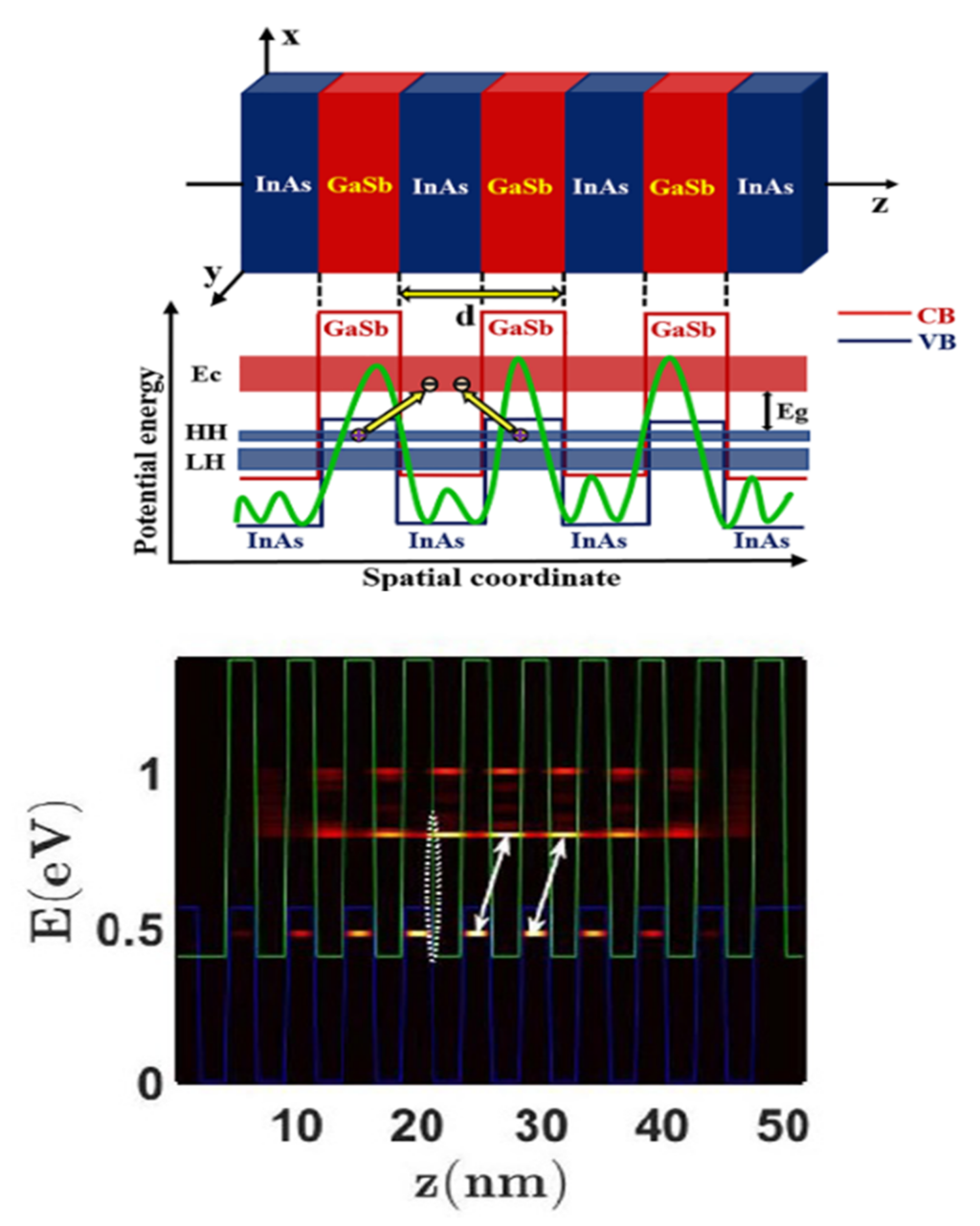
To provide the best possible performance, modern infrared photodetector designs necessitate extremely precise modeling of the superlattice absorber region. We advance the Rode’s method for the Boltzmann transport equation in conjunction with the 𝐤.𝐩 band structure and the envelope function approximation for a detailed computation of the carrier mobility and conductivity of layered type-II superlattice structures, using which…
Read more
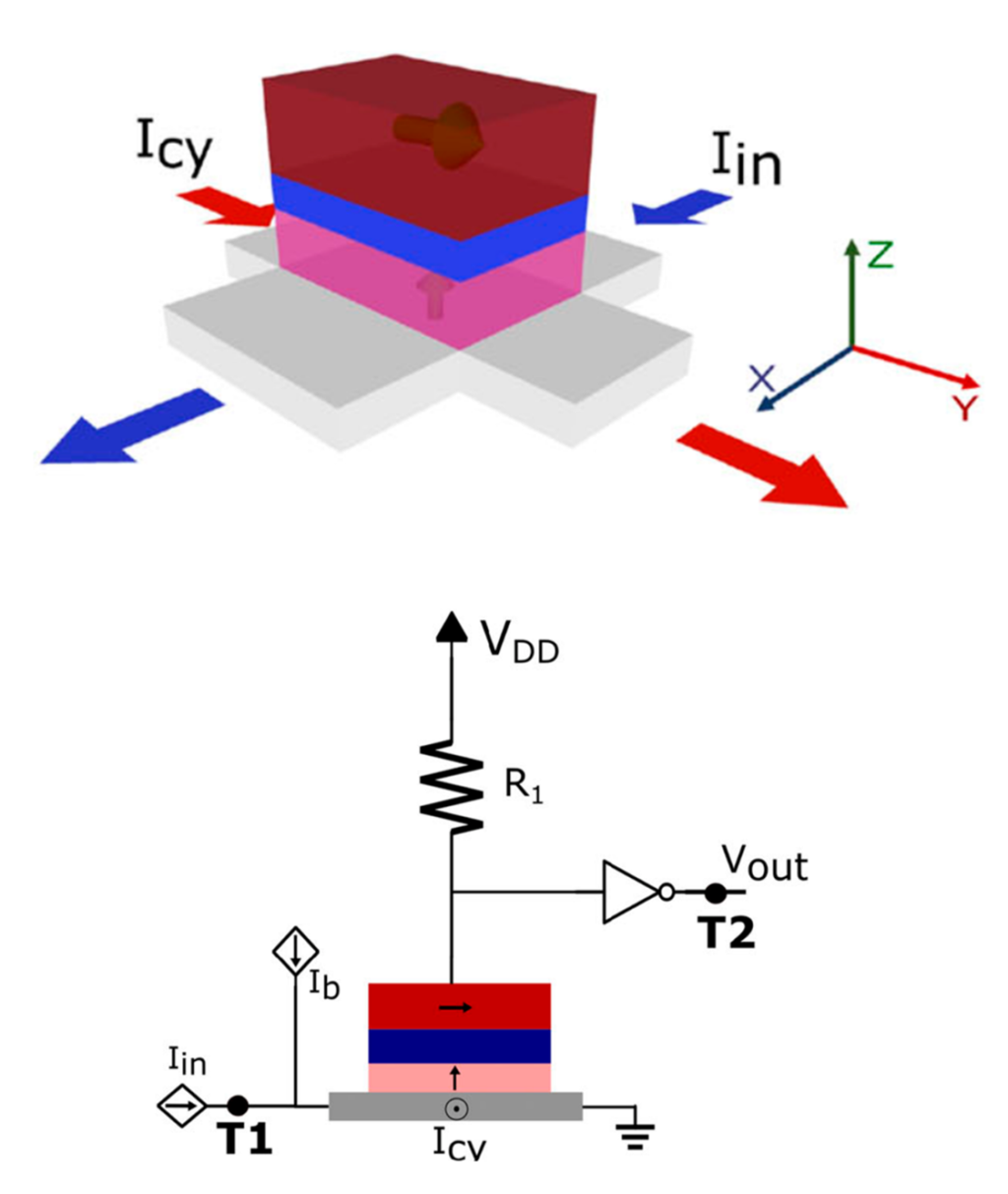
Neuromorphic computing is inspired by the working of the brain, which performs highly complex tasks while consuming remarkably low power. We employ spintronics to design devices, circuits, and networks to realize hardware implementation of machine learning architectures, i.e., neuromorphic computing. We use our developed hybrid simulation setup to incorporate the diverse physics of spin-transport, magnetization…
Read more
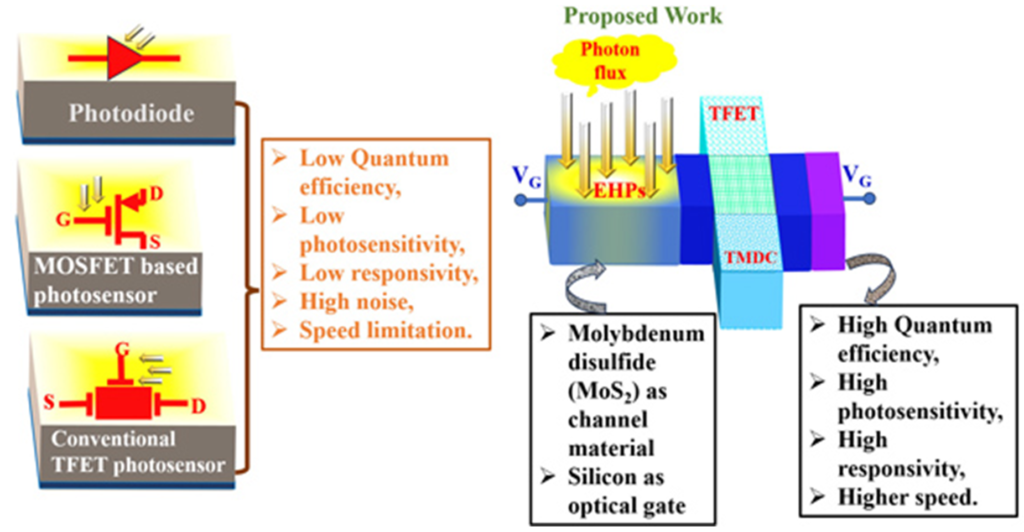
Photodetectors are of utmost importance in optoelectronics and the rising multiplicity of technology calls for new materials and novel device paradigms. This work proposes an optically gated double-gate tunnel field-effect transistor photosensor, employing a monolayer of transition metal dichalcogenide as the channel material. The photodetector works on the principle of band-to-band tunneling, which, we demonstrate,…
Read more
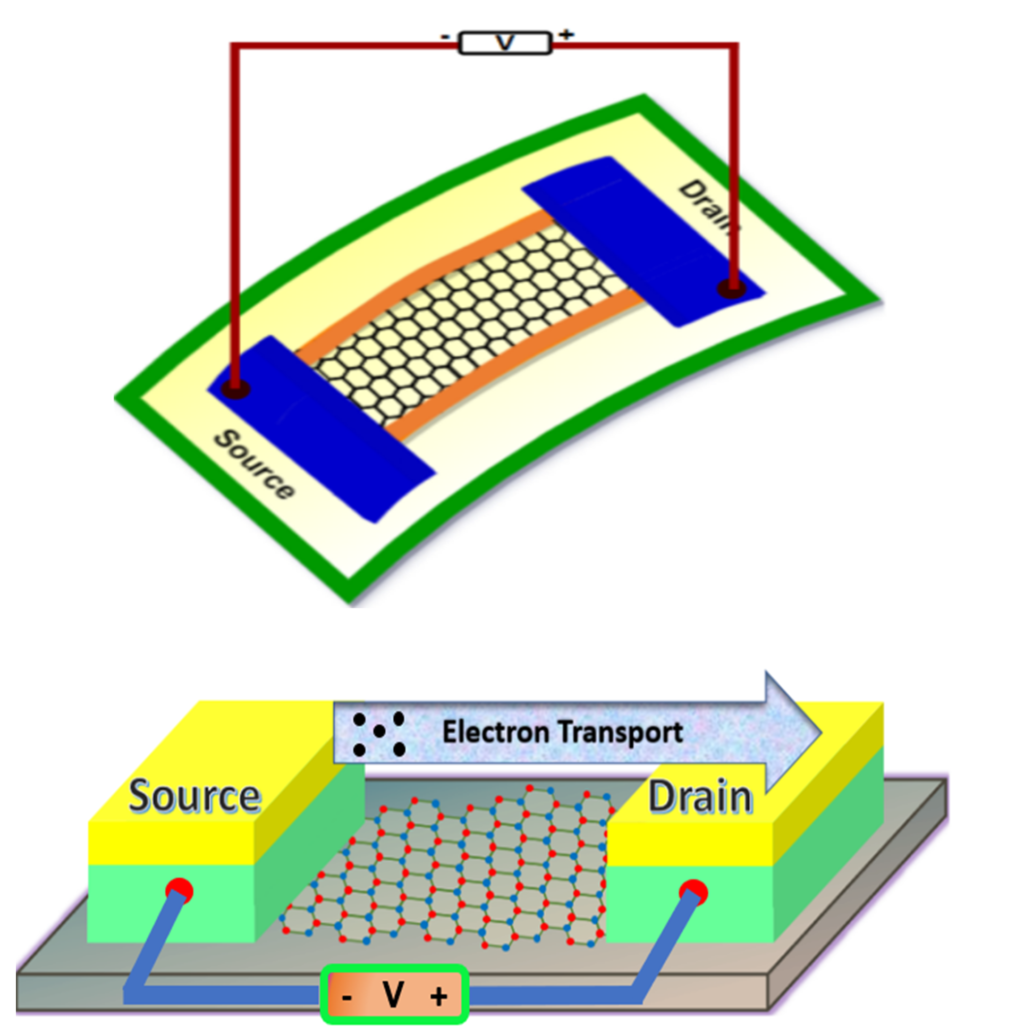
In recent years, graphene has been rigorously explored for straintronics applications due to its excellent properties. Inspired from this, we develop a template for rest of the Xenes to utilize them as an interconnect for flexible electronics in terms of piezo-conductivity, strain-insensitive transport angle and other related parameters.
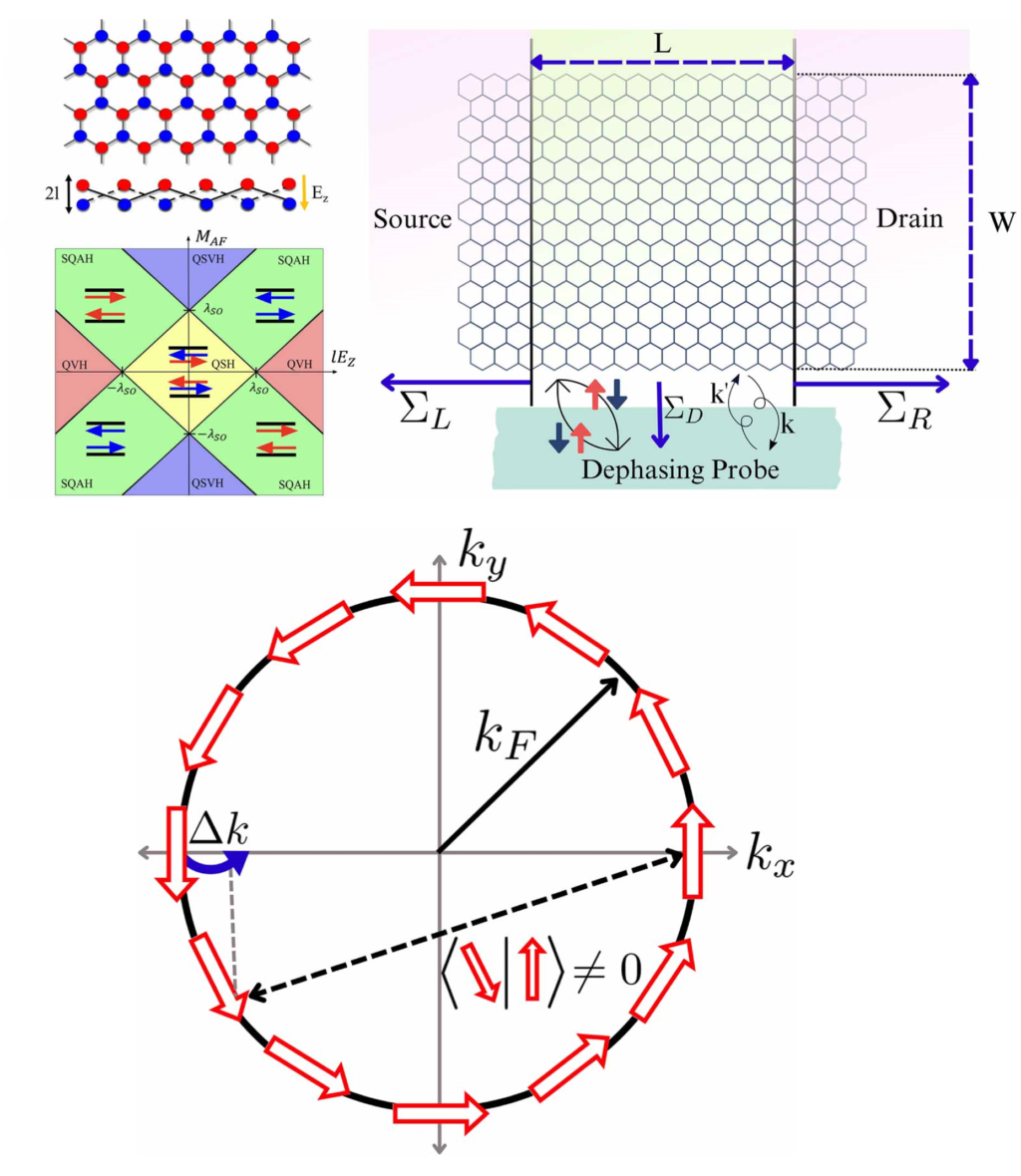
Harnessing topological phases with their dissipationless edge-channels coupled with the effective engineering of quantum phase transitions is a spinal aspect of topological electronics. The accompanying symmetry protection leads to different kinds of topological edge-channels which include, for instance, the quantum spin Hall (QSH) phase, and the spin quantum anomalous Hall (SQAH) phase. To model realistic…
Read more
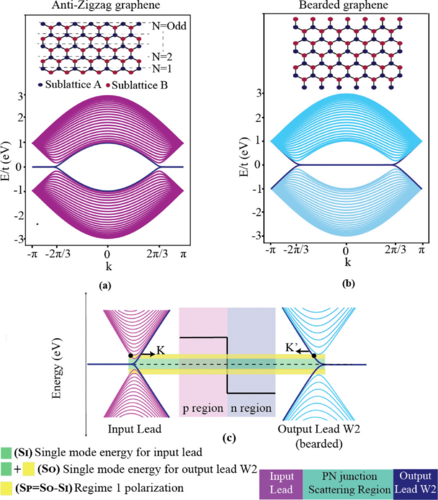
Valleytronics using two-dimensional materials opens unprecedented opportunities for information processing using a valley polarizer as a basic building block. Various methodologies, such as strain engineering, the inclusion of line defects, and the application of static magnetic fields, have been widely explored for creating valley polarization. However, these methods suffer from low transmission or lack of…
Read more
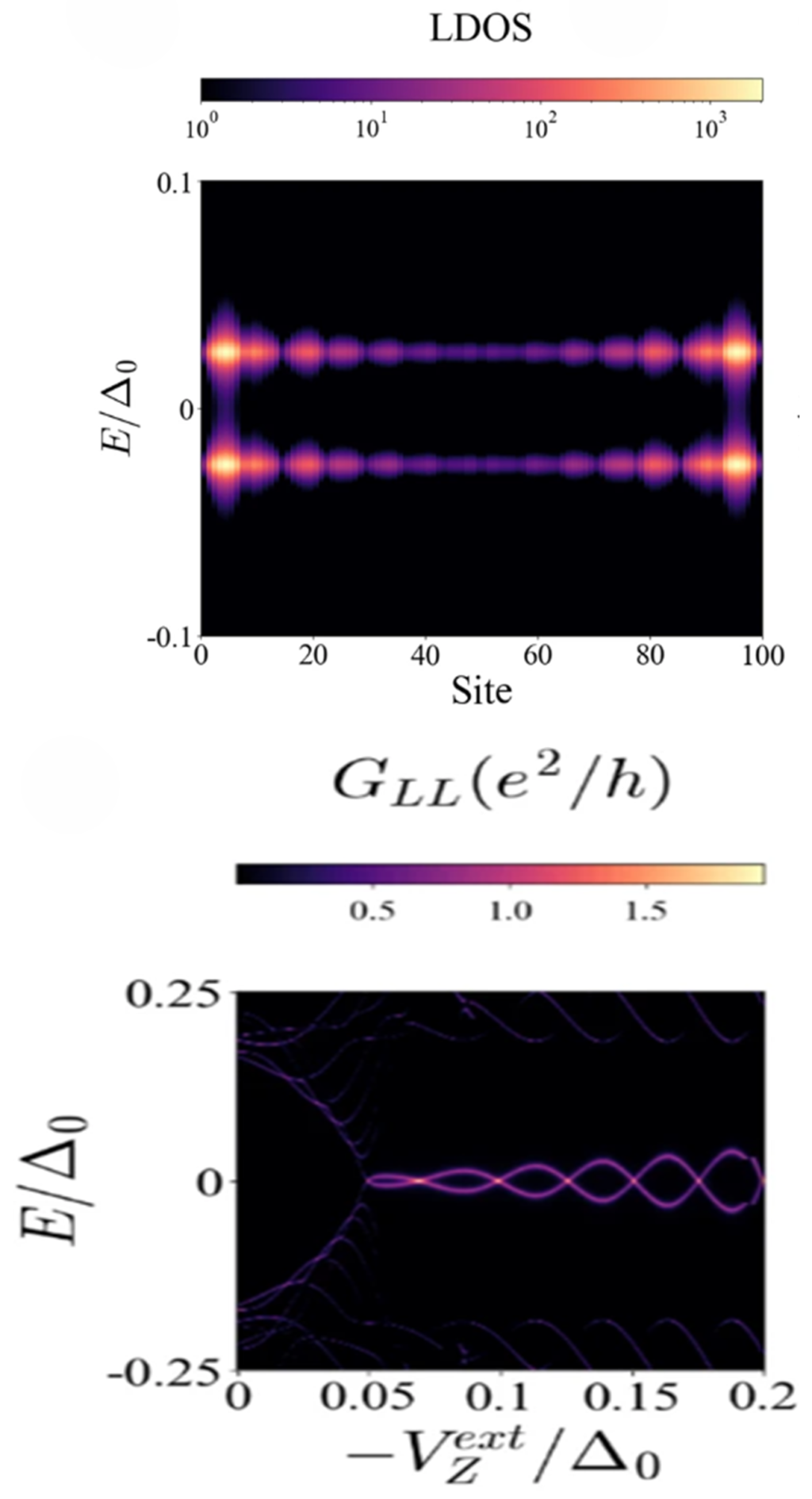
There has been recent interest in superconductor-magnetic insulator hybrid Rashba nanowire setups for potentially hosting Majorana zero modes at smaller external Zeeman fields. Using the non-equilibrium Green’s function technique, we develop a quantum transport model that accounts for the interplay between the quasiparticle dynamics in the superconductor-magnetic insulator bilayer structure and the transport processes through…
Read more
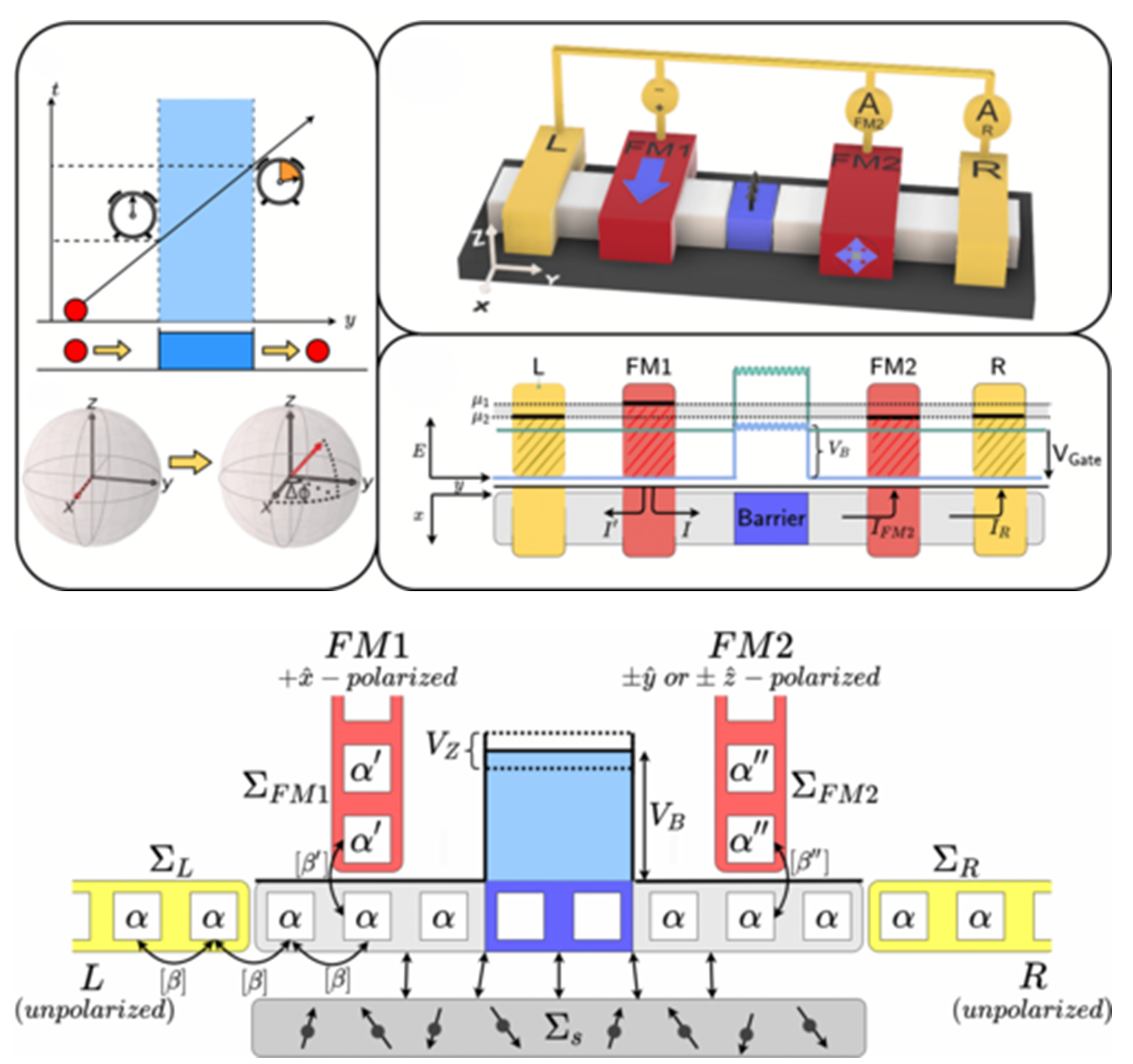
We propose a solid-state implementation of the Larmor clock that exploits tunnel magnetoresistance to distill information on how long itinerant spins take to traverse a barrier embedded in it. Keeping in mind that the tunneling time innately involves pristine preselection and postselection, our proposal takes into account the detrimental aspects of multiple reflections by incorporating…
Read more
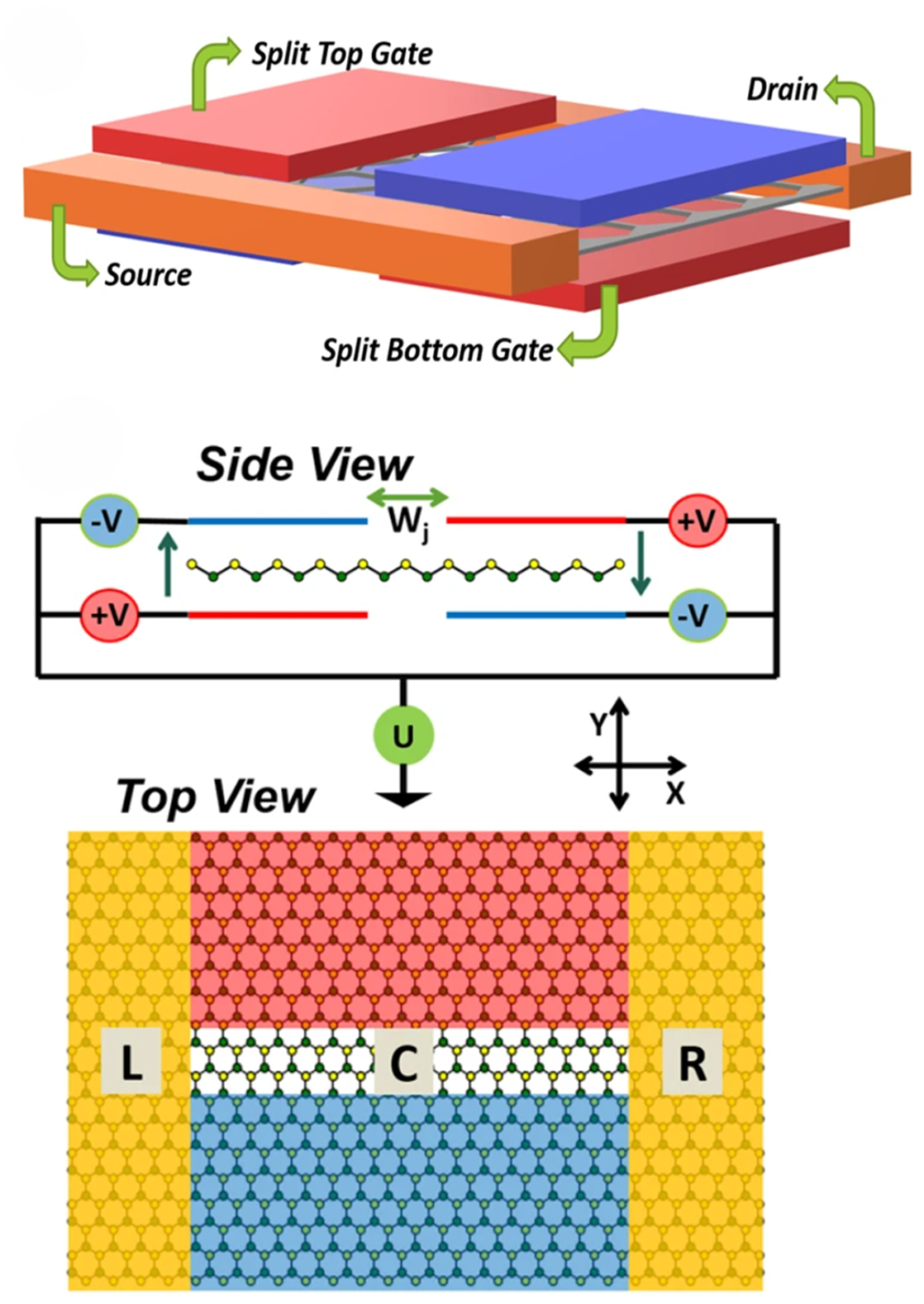
We propose a realizable device design for an all-electrical robust valley filter that utilizes spin protected topological interface states hosted on monolayer 2D-Xene materials with large intrinsic spin–orbit coupling. In contrast with conventional quantum spin-Hall edge states localized around the X-points, the interface states appearing at the domain wall between topologically distinct phases are either from…
Read more
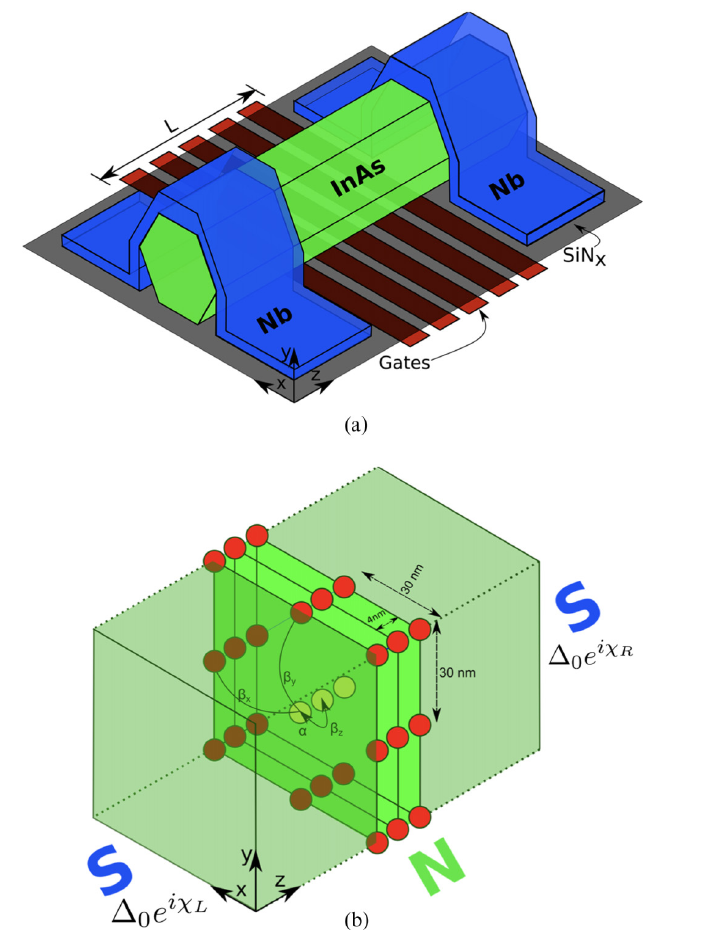
Semiconductor-superconductor hybrid systems provide a promising platform for hosting unpaired Majorana fermions towards the realization of fault-tolerant topological quantum computing. In this study we employ the Keldysh nonequilibrium Green’s function formalism to model quantum transport in normal-superconductor junctions.


